The ACCA Knowledge Level: Your First Step to Global Career.
Table of Content
Understanding ACCA Syllabus – Knowledge Level
The Basics
Since its inception in 1904, the Association of Chartered Certified Accountants (ACCA) has been a global leader in professional accounting. With 240,952 current members and 541,930 aspiring members worldwide, ACCA offers the prestigious Chartered Certified Accountant qualification. In today’s fiercely competitive business landscape, ACCA stands as a pivotal force in shaping successful careers.
To know the ACCA Qualification updates, check out the video below:
ACCA Syllabus
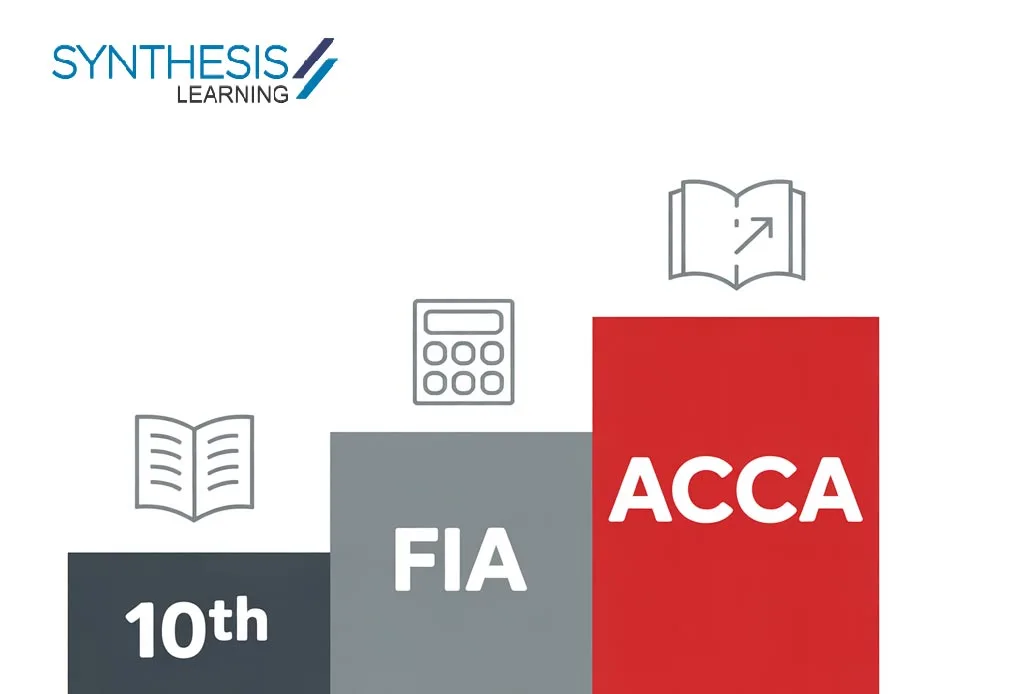
The ACCA journey is a three-stage ascent. Knowledge Level: Build your base with core accounting knowledge. Skills Level: Sharpen your skills, wielding finance like a pro. Professional Level: Conquer the peak, specializing and becoming a true strategic thinker. The ACCA syllabus – your map to the summit of accounting expertise. Climb smart, climb strong!
Lets Explore the foundations of finance and accounting through the comprehensive Applied Knowledge exams, gaining a broad understanding of crucial accounting techniques.
These exams, though foundational, are not to be underestimated. They lay the groundwork for your entire accounting career, building the solid knowledge base you’ll rely on throughout your studies and professional practice. But fear not, future accountant! With the right approach and resources, you can ace these exams and confidently move on to the next stage.
Business and Technology (BT)
Business and Technology teach how businesses operate effectively, efficiently, and ethically, showcasing finance professionals’ critical role in this. You’ll understand business in the context of its environment, including economic, legal and regulatory influences on aspects like governance, employment, health and safety, data protection and security.
ACCA syllabus covered in Business and Technology (BT) September 2023 to August 2024:1. The business organization and its external environment
The purpose and types of business organization
Stakeholders in business organizations
Political and legal factors affecting business
Macroeconomic factors
Microeconomic factors
Social and demographic factors
Technological factors
Environmental and sustainability factors
Competitive factors
2. Organizational structure, culture, governance and sustainability
The formal and informal business organization
Business organizational structure
Organizational culture
Governance in business organizations
Sustainable business practices
3. Business functions, regulation and technology
The relationship between accounting and other business functions
Accounting and finance functions within business organisations
Regulation and financial crime
Financial information provided by business
Financial systems and technology
Internal controls
The impact of advances in technology
4. Leadership and management
Leadership, management, and supervision
Individual and group behavior’s in business organizations
Team formation, development, and management
Motivating individuals and teams
Learning and training at work
Review and appraisal of individual performance
5. Personal effectiveness and communication in business
Personal effectiveness
Consequences of ineffectiveness at work
Competence frameworks and personal development
Sources of conflicts and techniques for conflict resolution
Communicating in business
6. Professional ethics
Fundamental principles of ethical behaviour
The role of regulatory and professional bodies in promoting ethical and professional standards in
Acquire skills in management accounting to effectively support businesses in planning, controlling, and monitoring performance. Explore diverse financial management strategies within an organization to optimize business performance.
ACCA syllabus covered in Management Accounting (MA) September 2023 to August 2024:1. The nature, source and purpose of management information
Accounting for management
Sources of data
Cost classification
Presenting information
2. Data analysis and statistical techniques
Sampling methods
Analytical techniques in budgeting and forecasting
Learn the underlying principles and concepts of financial accounting, accounting techniques and the preparation of basic financial statements. You’ll demonstrate technical proficiency in double-entry techniques, including preparing and interpreting basic financial statements for sole traders, partnerships, companies and simple groups of companies.
ACCA syllabus covered in Financial Accounting (FA) September 2023 to August 2024:1. The context and purpose of financial reporting
The scope and purpose of financial statements for external reporting
Stakeholders’ needs
The main elements of financial reports
The regulatory framework
Duties and responsibilities of those charged with governance
2. Accounting principles, concepts and qualitative characteristics
Key principles and concepts of accounting
Qualitative characteristics of useful financial information
3. The use of double-entry and accounting systems
Double-entry book-keeping principles including the maintenance of accounting records
General ledger accounts and journal entries
4. Recording transactions and events
Sales and purchases
Cash
Inventories
Tangible non-current assets
Depreciation
Intangible non-current assets and amortisation
Accruals expenses (accruals), prepaid expenses (prepayments), accrued income, and deferred income
Receivables and payables
Provisions and contingencies
Capital structure and finance costs
5. Reconciliations
Bank reconciliations
Trade payables account reconciliations
6. Preparing a trial balance
Trial balance
Correction of errors
Suspense accounts
7. Preparing financial statements
Statement of financial position
Statement of profit or loss and other comprehensive income
Synthesis Learning pioneers innovation in education, implementing a precise 4-step process covering counseling, mentoring, coaching, and placements. This strategic approach guarantees ACCA students’ thorough comprehension and professional skill development.
The ACCA Knowledge Level Exams may be the first hurdle on your accounting journey, but they are by no means insurmountable. By diligently approaching your studies, utilizing the wealth of resources available, and developing effective revision strategies, you can confidently conquer these exams and lay the critical foundation for a successful career in finance.
Remember, the knowledge and skills you acquire at this stage will serve you well throughout your professional life. Your understanding of core accounting principles, financial analysis techniques, and the broader business landscape will empower you to make informed decisions, solve complex problems, and navigate the ever-evolving world of finance with confidence.