AI is changing how finance teams analyse data, automate processes and support business decisions.
ACCA is evolving with it.
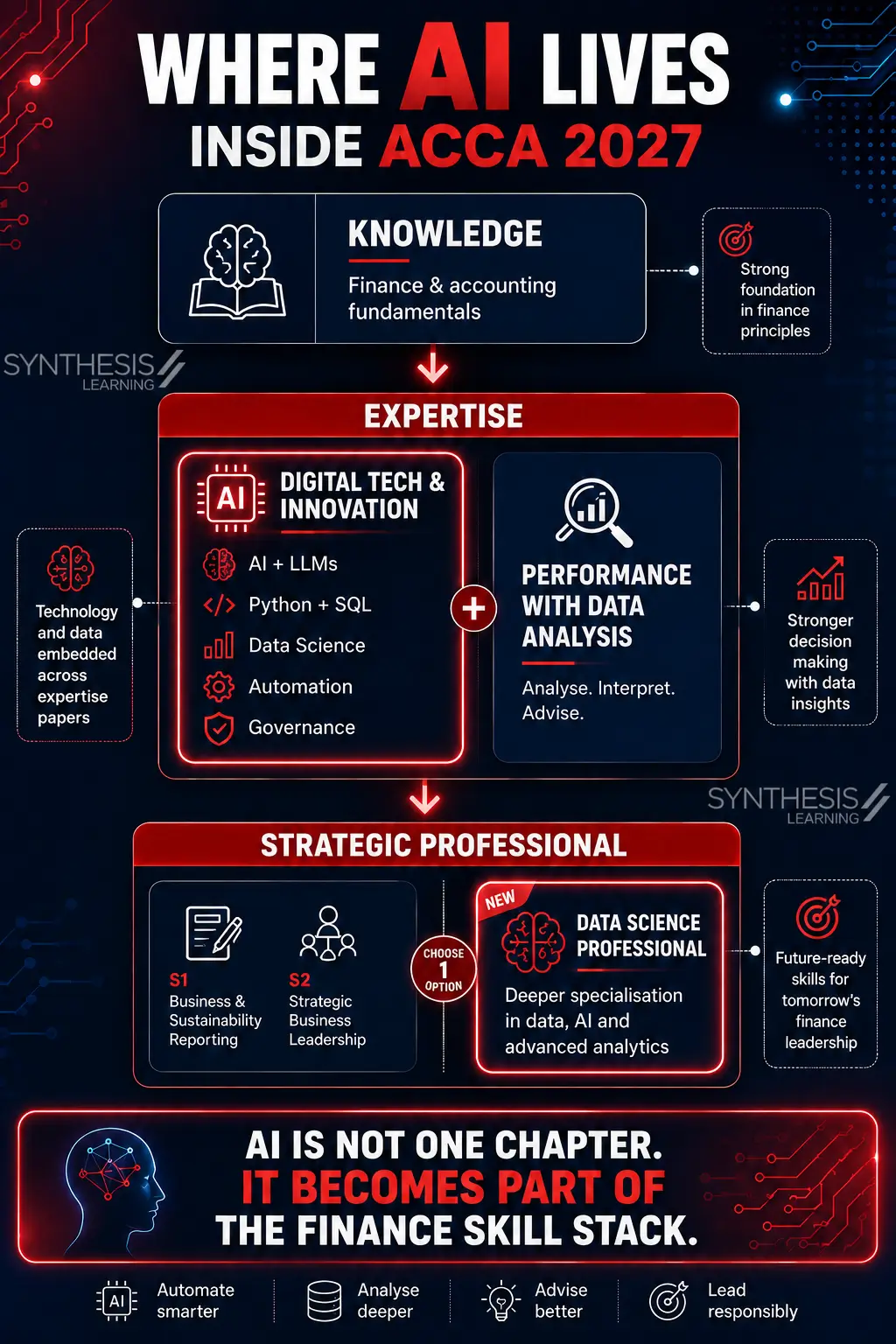
The redesigned ACCA Qualification launching from 2027 places a stronger and more visible focus on AI, data, digital technology, innovation and future workplace skills – while keeping accounting and finance knowledge at the core.
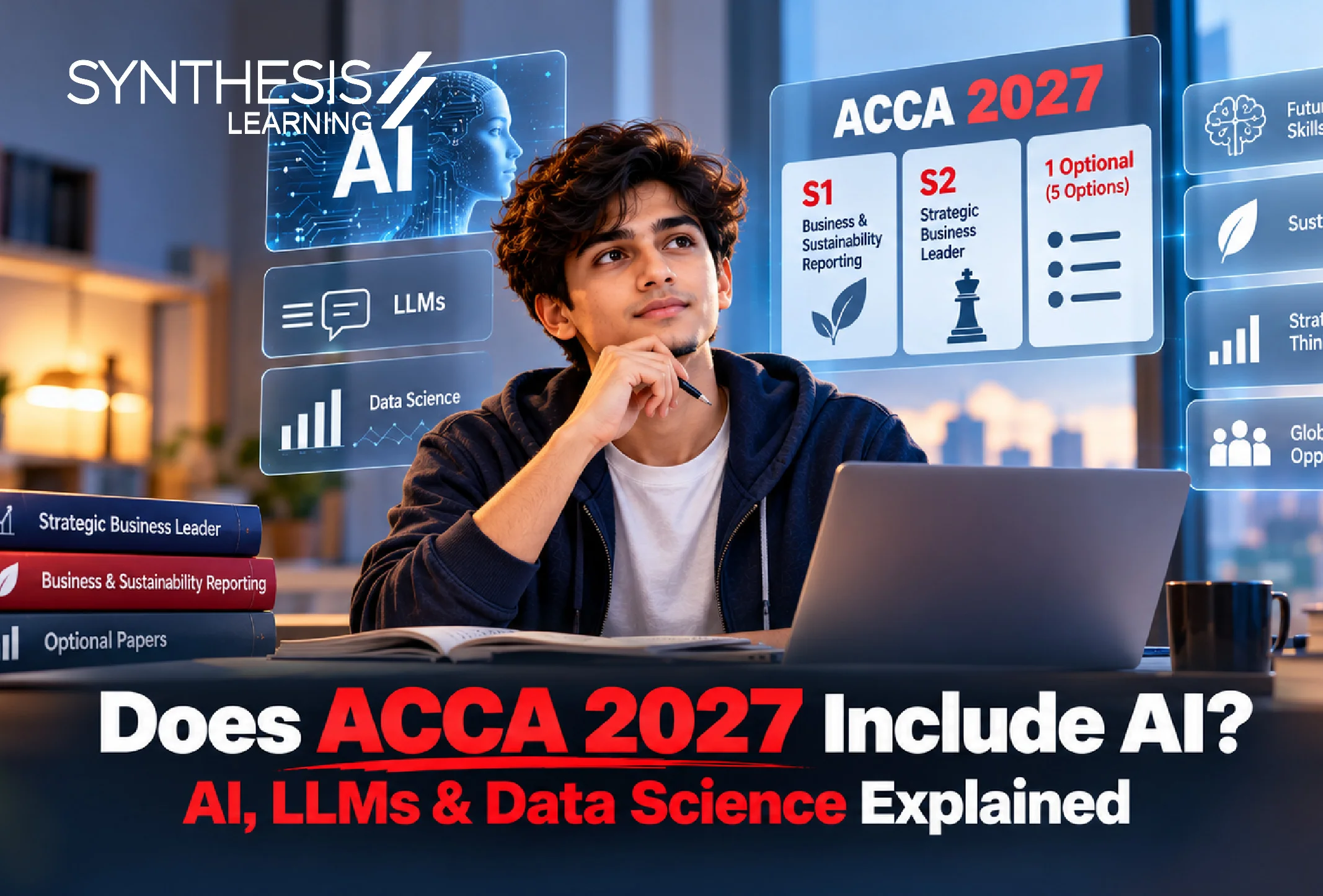
Students will encounter areas such as Large Language Models (LLMs), data science, Python, SQL, automation and model governance. Those who want deeper specialisation can also choose Data Science Professional at Strategic Professional level.
So yes, AI is part of ACCA 2027, but there is an important distinction between becoming AI-literate and becoming a data scientist.
Does ACCA 2027 Include Artificial Intelligence?
Yes. AI is explicitly included in the redesigned ACCA Qualification.
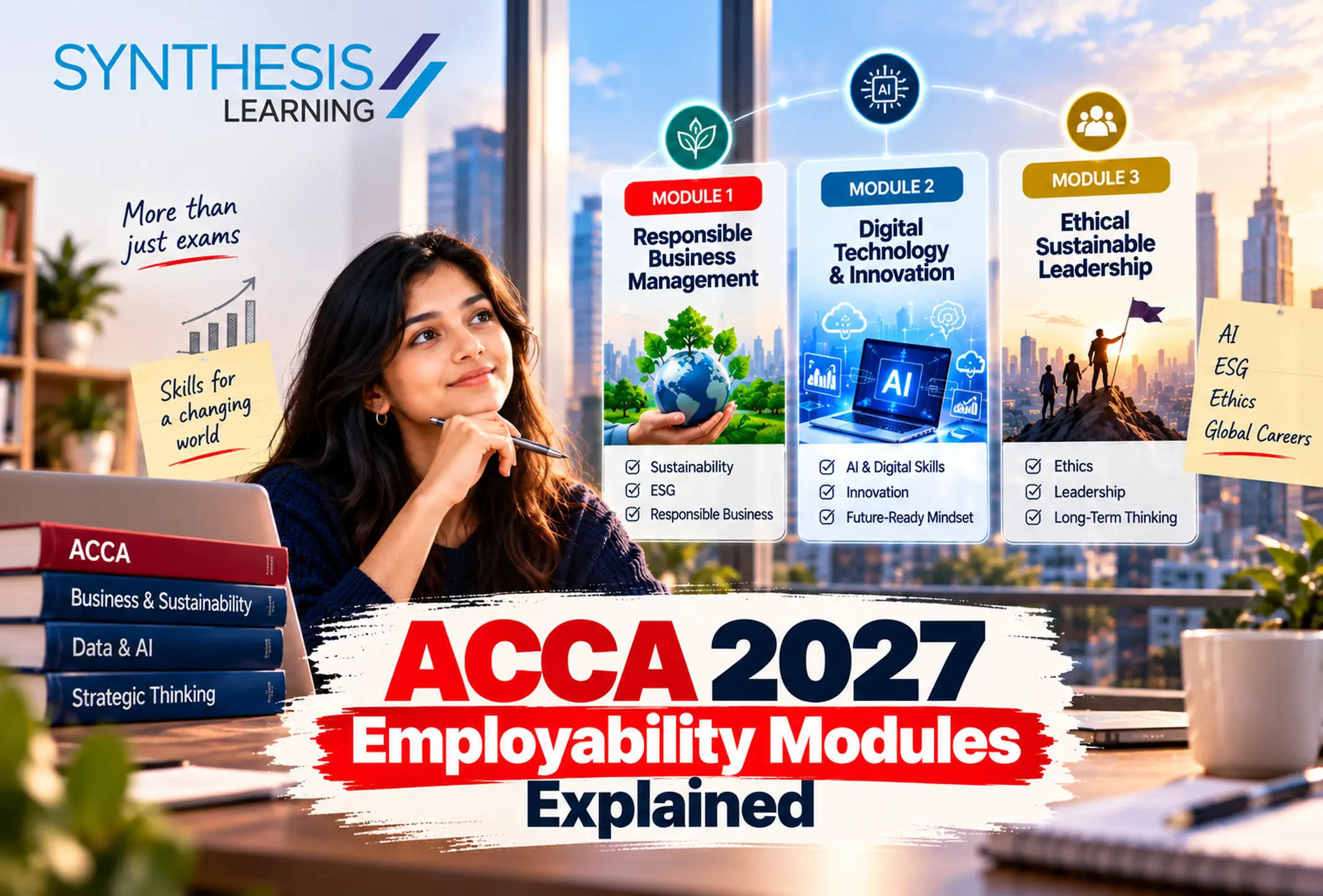
At the Expertise level, the Digital Tech and Innovation Essential Employability Module introduces students to areas including artificial intelligence, LLMs, programming, data science, automation, modelling, governance and data visualisation.
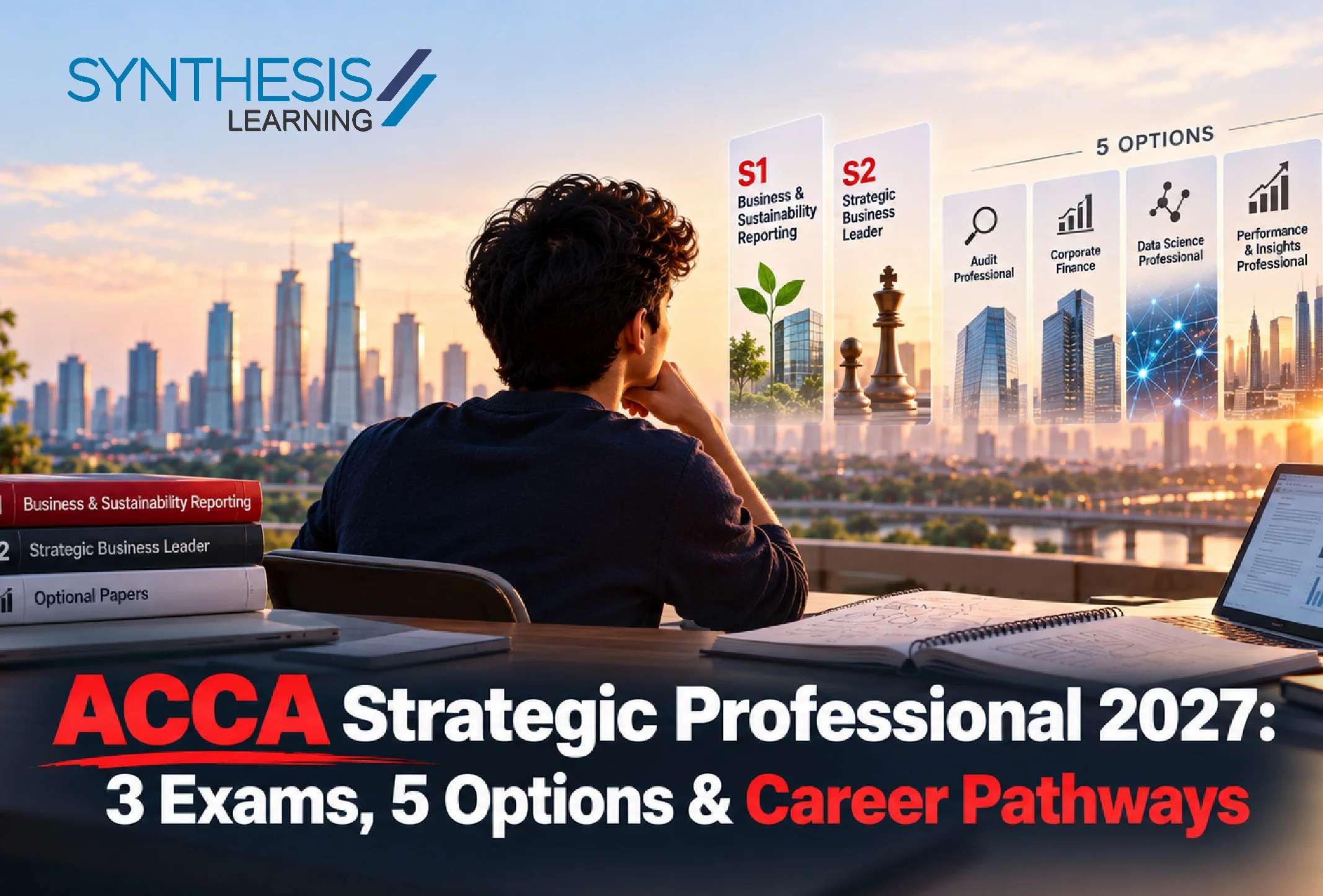
ACCA is also introducing Data Science Professional as a Strategic Professional option for students who want to develop deeper capability in data science and analytics.
But this does not turn ACCA into a coding qualification.
Quick insight:
Finance remains the foundation. AI and technology become part of how future accountants analyse, question and advise.
Is AI New to ACCA in 2027?
Not entirely.
The current ACCA Qualification already integrates technology, digital and data across exams, EPSM and practical experience.
Existing learning includes areas such as AI, machine learning, analytics, cloud technology and automation.
So what changes in 2027?
The technology layer becomes more explicit, structured and visible.
Students will see stronger connections across:
- Digital Tech and Innovation
- Performance with Data Analysis
- Data Science Professional
- AI and LLM awareness
- Data governance
- Digital business
- Technology-enabled decision-making
What this actually means:
AI is not suddenly appearing in ACCA. Its depth and importance are increasing.
Where Does AI Appear in the New ACCA Qualification?
AI is not restricted to one chapter.
| ACCA 2027 area | Digital / AI connection |
| Digital Tech and Innovation | AI, LLMs, Python, SQL, data science, automation, governance and visualisation |
| Performance with Data Analysis | Using data to understand performance and support business decisions |
| Data Science Professional | Deeper data science, analytics, modelling and professional application |
| Other ACCA learning | Technology and data applied within relevant finance and business contexts |
| Employability development | Digital judgement, ethics, scepticism and responsible technology use |
ACCA says technology and data science will be embedded throughout the future qualification, with Data Science Professional available for students wanting deeper specialisation.
What Will ACCA Students Actually Learn About AI?
The current Digital Tech and Innovation syllabus goes beyond simply explaining what AI means.
It introduces students to practical digital concepts used in modern business and finance.
| AI-era area | What students are introduced to |
| AI & LLMs | Capabilities, limitations and business applications |
| Programming | Fundamentals of Python and SQL in accounting-related contexts |
| Data science | Modelling, analytical techniques and model performance |
| Automation | Improving repetitive business and accounting workflows |
| Finance applications | Data-led analysis, forecasting and decision support |
| AI governance | Bias, privacy, ethics, controls and technology risk |
| Data storytelling | Visualising and communicating useful insights |
The objective is not to turn finance students into software engineers.
It is to help them understand enough technology to use it intelligently and challenge it when necessary.
Does ACCA 2027 Teach ChatGPT or Generative AI?
Not specifically as “ChatGPT training.”
The current syllabus does not name ChatGPT or prescribe training on one commercial AI product.
Instead, Digital Tech and Innovation explicitly introduces AI and Large Language Models, including their capabilities, limitations and use within business and accounting workflows.
This is a smarter long-term approach.
Specific AI tools will keep changing. Understanding how LLMs work, where they can help and where professional judgement is still required is more durable.
Most aspirants miss this:
ACCA teaches the technology and its professional application, not simply how to use one trending AI app.
Does Every ACCA Student Become a Data Scientist?
No.
Every student is expected to develop stronger digital and data awareness, but Data Science Professional is an optional Strategic Professional exam.
Think of it this way:
Every future ACCA professional
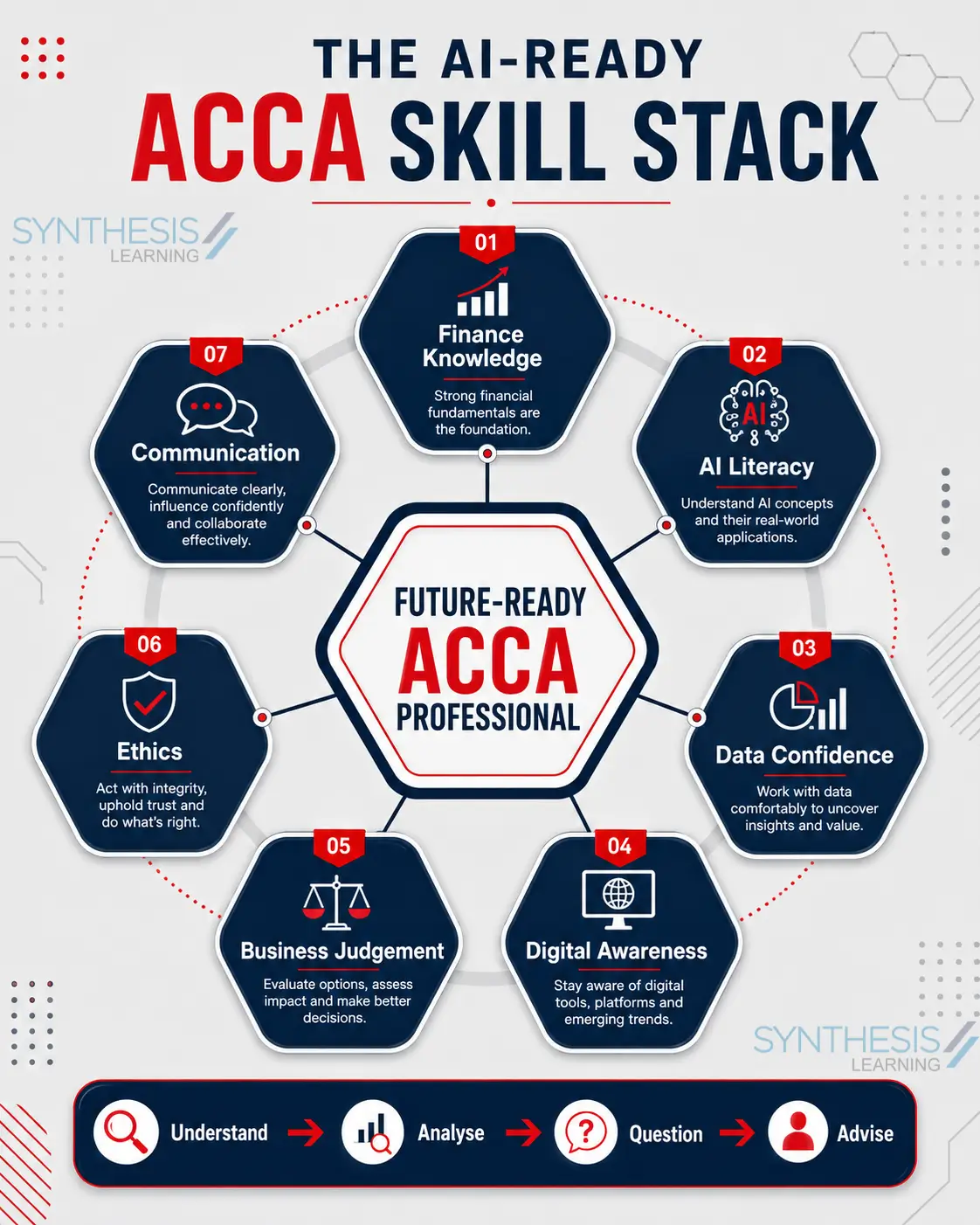
Finance + Data Confidence + Digital Awareness + AI Literacy
Students choosing Data Science Professional
Deeper Analytics + Modelling + Programming + Data Science Application
This distinction matters.
ACCA is developing technology-aware finance professionals first. Data science becomes a deeper specialisation for students whose career interests require it.
Why Is ACCA Going Deeper Into AI and Technology?
Because the role of finance itself is changing.
Routine processes are becoming automated.
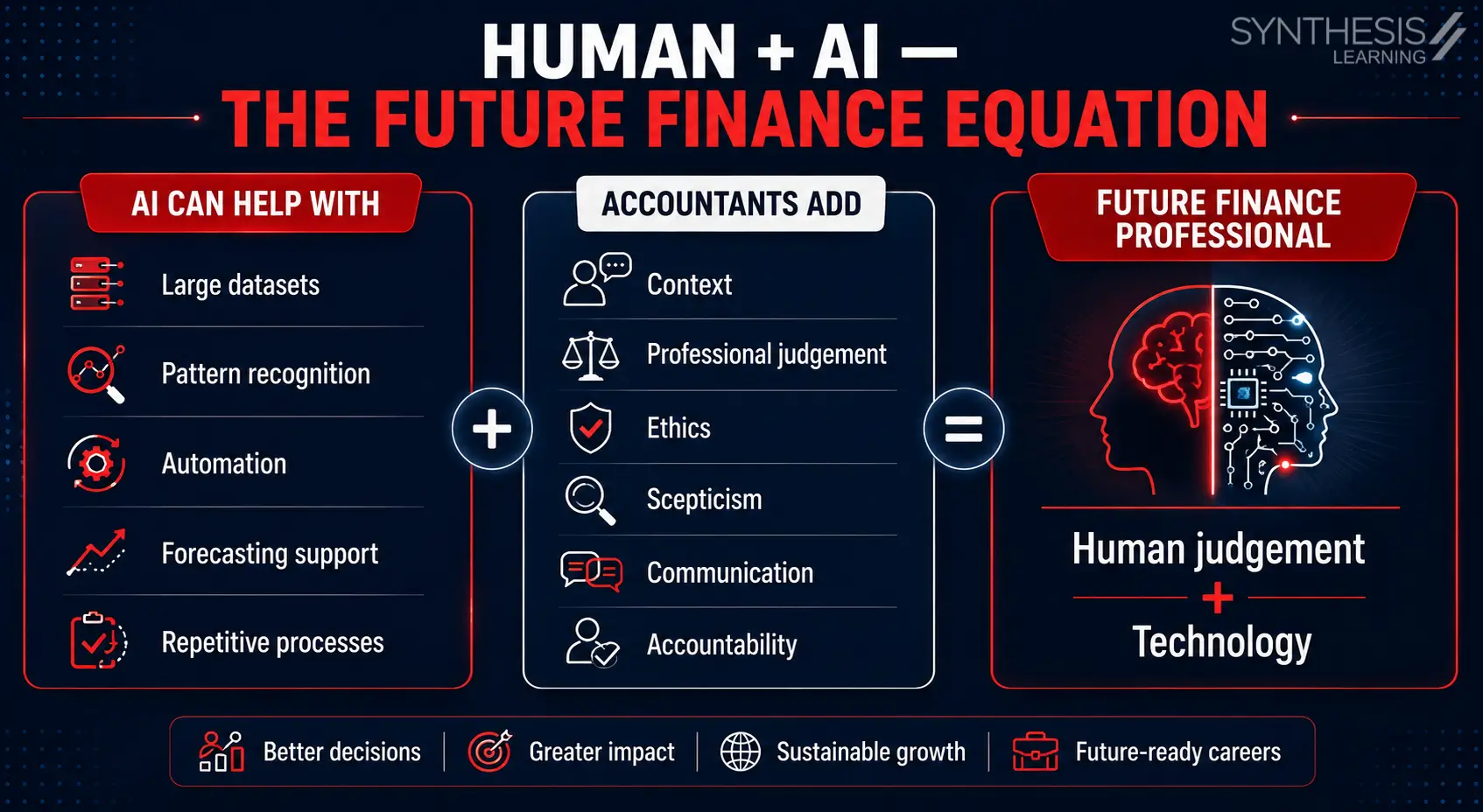
AI can increasingly support repetitive work, data processing and knowledge-intensive tasks.
Businesses are becoming more data-led
Finance teams are expected to move beyond reporting numbers and help management understand what those numbers mean.
Technology introduces new risks
AI outputs still need:
- Validation
- Professional scepticism
- Ethical judgement
- Privacy controls
- Governance
- Human accountability
ACCA’s own AI research stresses that AI can improve efficiency and decision support, while human intervention remains important at critical points.
Will AI Replace Accountants, or Change Their Role?
AI is more likely to change what accountants spend their time doing than simply make finance professionals irrelevant.
Routine and repetitive work can increasingly be automated.
That raises the value of capabilities such as:
- Interpretation
- Professional judgement
- Scepticism
- Business understanding
- Ethics
- Communication
- Strategic advice
Reality check:
The bigger divide may not be AI vs accountants. It may be between accountants who can work effectively with AI – and those who cannot.
How AI Skills Build on Traditional Accounting Skills
AI does not remove the need for strong accounting fundamentals.
It makes them more important.
| Core finance capability | AI-era extension |
| Financial reporting | Review automated outputs and question data quality |
| Budgeting & forecasting | Use data and models to assess scenarios |
| Audit & controls | Analyse anomalies and technology-related risks |
| Professional judgement | Challenge questionable AI recommendations |
| Internal controls | Consider data governance, privacy and model oversight |
| Financial analysis | Work with larger datasets and automated workflows |
| Communication | Turn analysis into clear business recommendations |
Quick insight:
Traditional accounting becomes the domain knowledge that tells you whether the technology is right or wrong.
How Should ACCA Students Prepare for AI-Driven Finance?
You do not need to become a coder before beginning ACCA.
Build these six habits instead:
1. Get your finance fundamentals right
You cannot challenge an AI-generated accounting answer if you do not understand the underlying concept.
2. Become comfortable with data
Learn to ask where information came from, what it shows and whether it is reliable.
3. Build AI literacy
Understand what AI does well, and where hallucinations, bias or weak data can create problems.
4. Develop digital confidence
Future ACCA learning makes technology, modelling and data tools increasingly relevant.
5. Strengthen professional scepticism
A confident-looking AI answer is not automatically a correct answer.
6. Learn to communicate insight
Technology can produce information. Finance professionals still need to explain what businesses should do with it.
Quick insight:
Tools will change. The ability to question, interpret and apply them lasts longer.
Preparing ACCA Students for a Technology-Driven Finance Career
The qualification is becoming more future-ready. Preparation should move in the same direction.
Synthesis Learning, a House of Global Courses with 25+ years of legacy in business and finance education, combines ACCA exam preparation with a broader career-readiness approach.
Alongside concept-focused learning, students are encouraged to build practical capability around:
- Modern digital finance workflows
- Data-led thinking
- Technology-enabled analysis
- Business communication
- Professional confidence
- Workplace decision-making
- Employer expectations
As an ACCA Platinum Approved Learning Partner, Synthesis Learning also provides 1-on-1 mentorship, paper planning, structured doubt-solving, exam-focused mocks and career exposure through its wider industry ecosystem.
The idea is simple:
Do not prepare only for the ACCA exam you will sit. Prepare for the finance role you eventually want to perform.
What Should You Take Away?
Yes, ACCA 2027 includes AI – and in a much more meaningful way than adding one isolated technology chapter.
Students will encounter AI, LLMs, data science, digital tools, governance and technology-enabled finance throughout the redesigned learning journey, with deeper specialisation available through Data Science Professional.
But ACCA remains fundamentally a business and finance qualification.
The real shift is towards professionals who can combine:
Finance knowledge + Data + Technology + Human judgement
That is what makes the redesigned ACCA even more relevant to the future of finance.