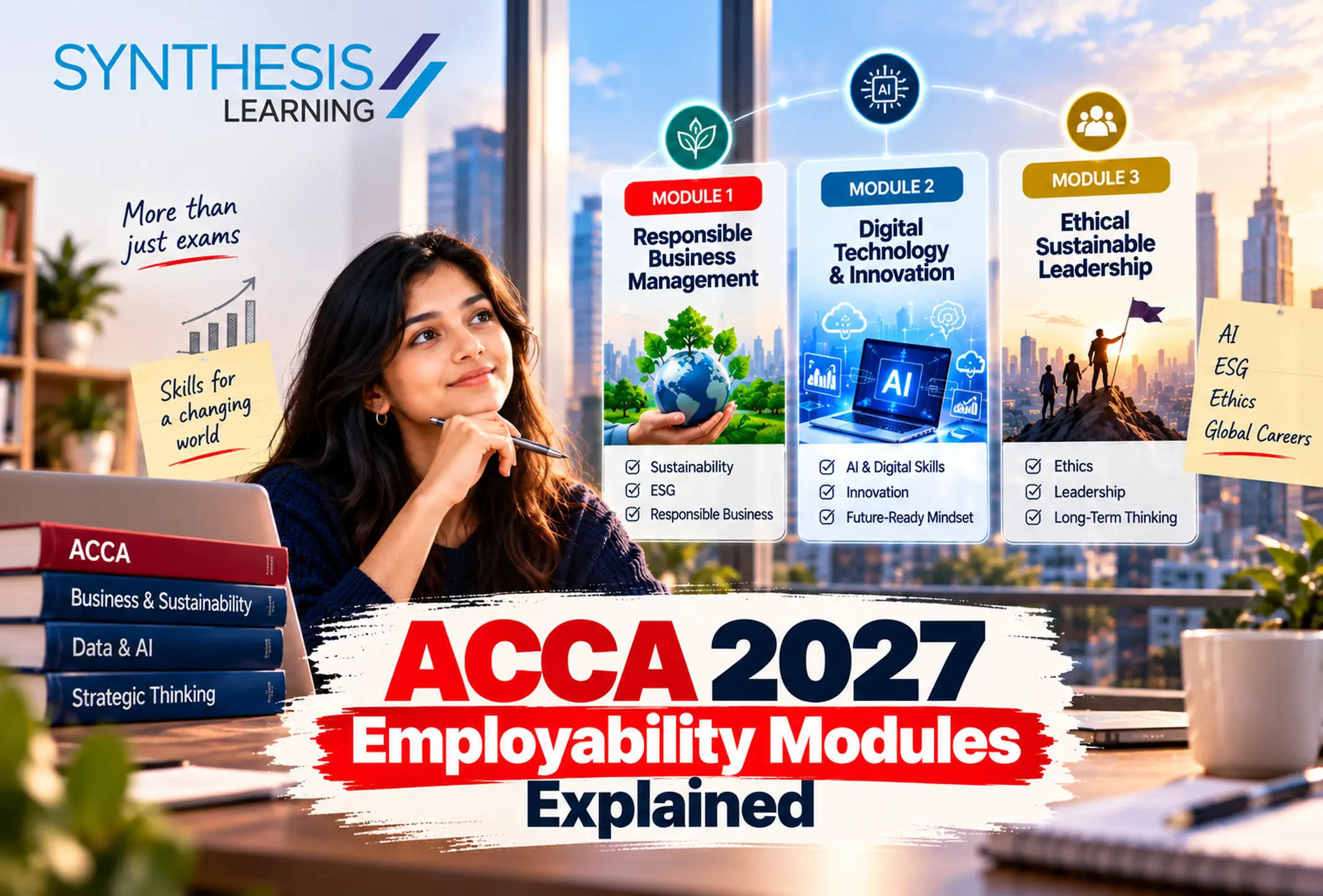

10 Real ACCA Benefits: Why It Is a Future-Ready, Global, Business & Finance Qualification
Finance careers are no longer only about preparing accounts or reporting past numbers.
Employers increasingly need professionals who can understand finance, interpret data, work with technology and support better business decisions.
This is where the real ACCA benefits become visible.
ACCA combines global accounting knowledge with business thinking, ethics, practical experience and a growing focus on technology, sustainability and data.
This guide breaks down ten benefits of ACCA and helps you decide whether they match the career you want.
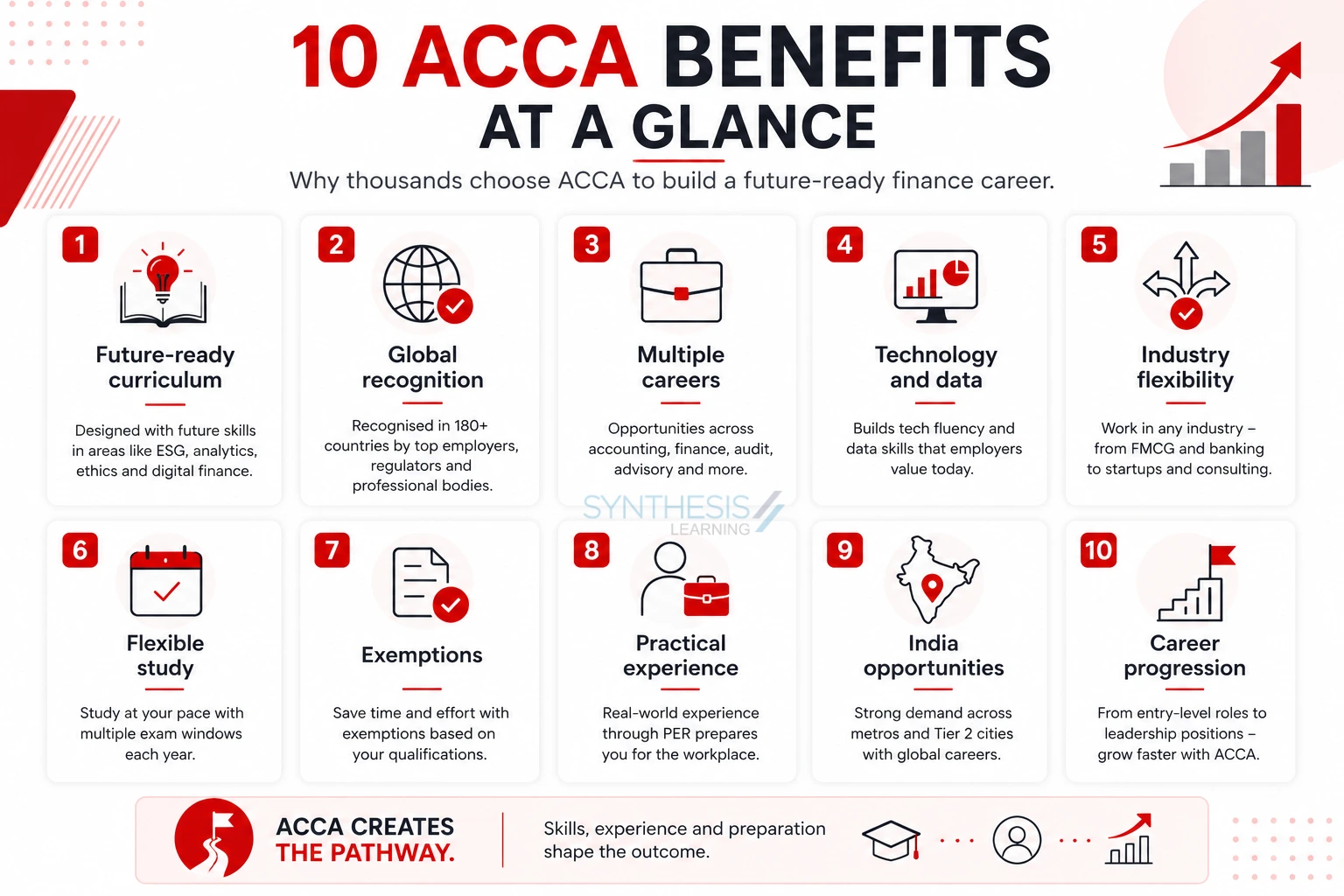
ACCA Benefits at a Glance
| ACCA can offer | Why it matters |
|---|---|
| Future-ready finance skills | Greater relevance as AI and technology reshape finance |
| Global recognition | Wider exposure to multinational and cross-border roles |
| Multiple career paths | Options beyond traditional accounting |
| Flexible progression | Can be planned alongside college or work |
| Examination exemptions | Previous learning may reduce your exam route |
| Practical experience | Connects technical knowledge with workplace application |
| India relevance | Useful for GCCs, MNCs and global finance teams |
| Long-term development | Supports movement into specialist and leadership roles |
Why More Students Are Considering ACCA
ACCA is already recognised across global finance markets, with more than 257,900 members and 530,100 future members across 180 countries.
But global recognition is only one part of its value.
ACCA is also evolving with the profession. Its redesigned qualification introduces greater emphasis on data analysis, digital innovation, sustainability, finance and investment, and even a Data Science Professional option from 2027.
Quick insight:
ACCA is no longer only about understanding the numbers. It is also about using them to guide business decisions.
10 Real ACCA Benefits Students Should Understand
1. Built for the Future of Finance
AI and automation are changing routine accounting work. Finance professionals are increasingly expected to analyse information, question outputs and explain what the numbers mean for the business.
ACCA’s future direction reflects this shift through data analysis, digital innovation, sustainability and strategic decision-making.
Reality check:
ACCA is not AI-proof. It prepares you to work at a higher level alongside technology.
2. Recognised Across Global Finance Markets
ACCA is understood by employers across several countries, industries and finance environments.
This can support opportunities in multinational companies, professional-services firms, global finance teams and organisations serving international markets.
However, recognition does not automatically provide a visa, overseas job or regulated signing rights in every country.
3. More Career Paths Than Traditional Accounting
ACCA does not restrict students to bookkeeping or financial accounting.
Depending on their skills and experience, students may explore:
- Financial reporting
- Audit and assurance
- FP&A
- Risk and internal controls
- Taxation
- Advisory
- Business finance
- Treasury
- Sustainability reporting
- Finance transformation
This breadth is useful when you are interested in finance but have not yet chosen one narrow specialisation.
4. Skills That Go Beyond Textbook Knowledge
The benefits of the ACCA qualification extend beyond learning accounting standards and calculations.
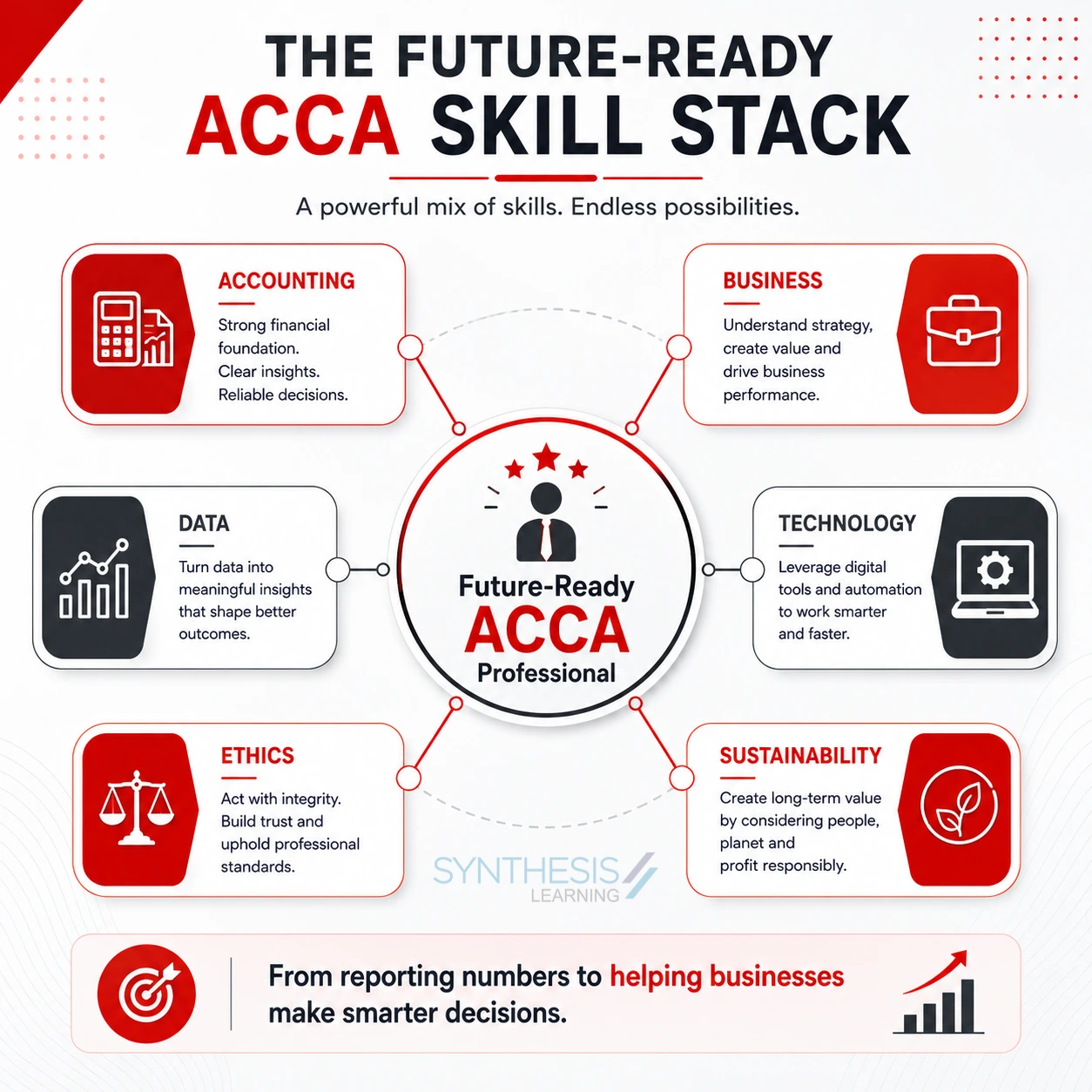
ACCA develops a wider professional skill stack:
These skills matter because employers need professionals who can understand a problem, evaluate options and communicate a recommendation, not simply produce a report.
5. Relevant Across Different Industries
Finance professionals are required in almost every sector.
ACCA-related roles can be found across:
- Banking and financial services
- Consulting
- Technology and fintech
- Manufacturing
- Retail
- Healthcare
- Logistics
- Real estate
- Professional services
The work may differ by industry, but the core need remains similar: helping businesses manage performance, reporting, risk and financial decisions.
6. Flexible Enough for College or Work
ACCA offers four main exam sessions each year: March, June, September, and December. Certain exams may also be available on demand.
This allows students to plan papers around:
- college semesters
- internships
- employment
- personal study capacity
- previous examination performance
Reality check:
Flexible does not mean easy. Poor paper planning can still delay your progress.
7. Exemptions Can Save Time
Students with relevant academic or professional qualifications may receive exemptions from certain ACCA exams.
Under the current qualification, exemptions can be awarded across the nine Applied Knowledge and Applied Skills exams. Strategic Professional exams cannot be exempted.
Most aspirants miss this:
More exemptions do not always mean stronger preparation.
The right decision depends on how well your previous course prepared you for advanced ACCA papers.
8. Practical Experience Is Part of the Journey
ACCA is not completed through examinations alone.
Under the current pathway, membership requires 36 months of supervised experience in a relevant finance or accounting role, along with nine performance objectives.
This encourages students to apply what they learn in real work situations.
| ACCA stage | What it means |
|---|---|
| Student | Progressing through the qualification |
| Affiliate | Completed the required examinations and ethics component |
| Member | Completed the full membership requirements, including practical experience |
9. Strong Relevance in India’s Global Finance Ecosystem
The ACCA benefits in India are not limited to students planning to move abroad.
India’s Global Capability Centres are increasingly handling higher-value finance work, including FP&A, reporting, data analytics, business partnering, controls and finance transformation.
This allows finance professionals in India to work on international processes, engage with global stakeholders, and make cross-border business decisions.
What this actually means:
Global finance exposure may begin in India itself.
10. Supports Long-Term Career Progression
ACCA can help professionals move from execution-focused roles towards analysis, specialisation, business partnering and leadership.
The typical progression is not:
It is closer to:
Salary will still depend on your role, employer, location, experience, industry and practical skills.
The Future-Ready ACCA Skill Stack
ACCA’s evolving curriculum reflects a wider shift in what finance professionals are expected to know.
| Skill area | How it supports a finance career |
|---|---|
| Accounting and reporting | Builds technical credibility |
| Business understanding | Connects finance with commercial decisions |
| Data analysis | Helps identify trends and explain performance |
| Technology awareness | Supports automation and digital finance work |
| Ethics | Strengthens judgement and professional trust |
| Sustainability | Prepares professionals for changing reporting expectations |
| Communication | Helps translate numbers into useful business insight |
What ACCA Can Add to a BCom Degree
The main BCom with ACCA benefits come from combining an academic degree with a professional finance pathway.
| BCom commonly provides | ACCA can add |
|---|---|
| Recognised university degree | Professional finance qualification pathway |
| Broad commerce education | Deeper finance and accounting knowledge |
| Indian academic context | International finance perspective |
| Semester-based learning | Professional computer-based examinations |
| General graduate eligibility | Specialised finance career preparation |
Students can pursue BCom and ACCA separately or join an integrated programme offering exemptions.
The better option depends on:
- teaching quality
- actual ACCA exam preparation
- exemption eligibility
- total cost
- academic support
- career exposure
Reality check:
Nine exemptions do not mean nine ACCA papers were personally studied and cleared.
Students should evaluate whether the programme builds genuine knowledge, not only how many exams it removes.
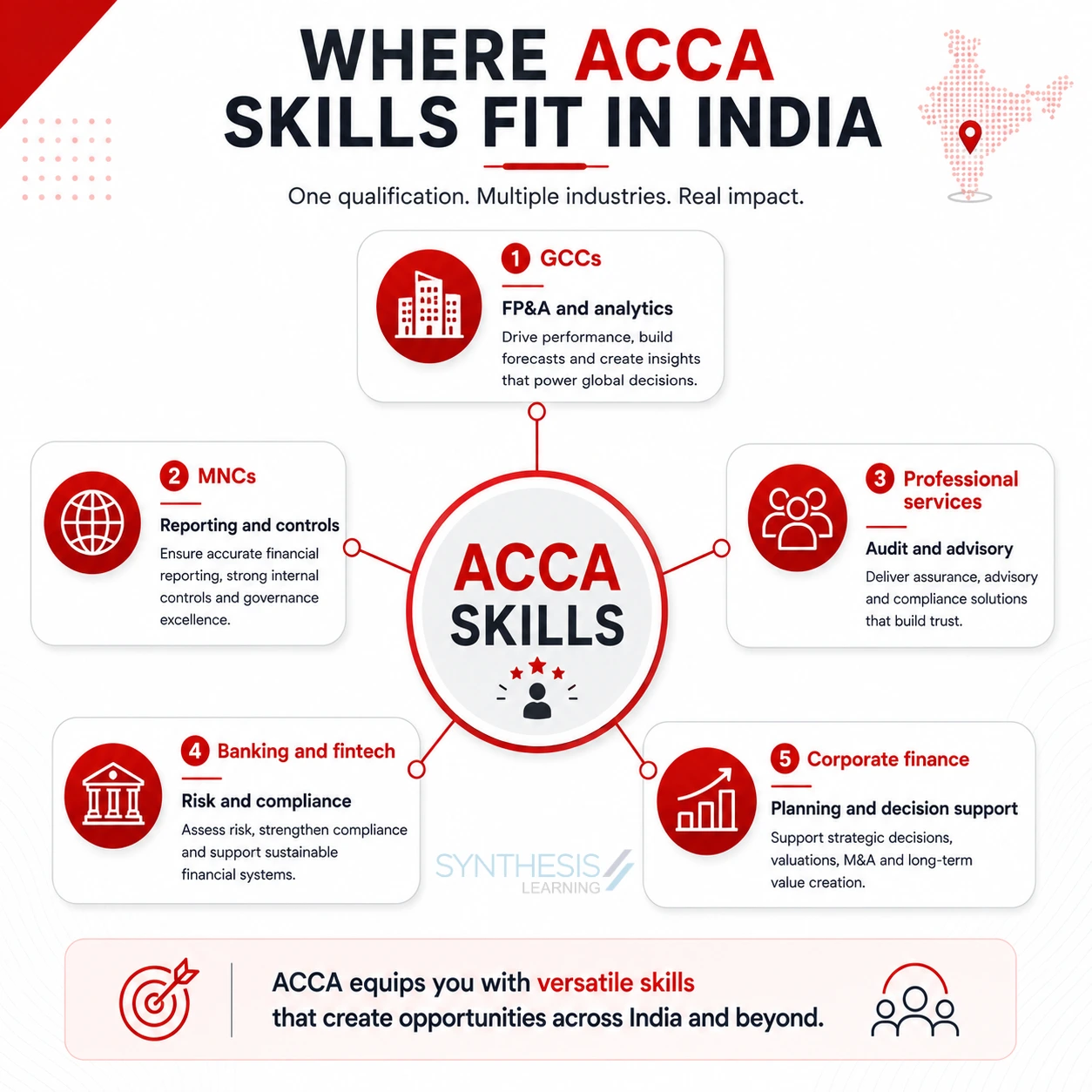
ACCA Benefits in India: Where the Qualification Can Be Relevant
India’s finance ecosystem now includes GCCs, shared-service centres, multinational companies, professional-services firms and rapidly growing technology businesses.
| Work environment | Relevant areas of work |
|---|---|
| GCCs and MNCs | FP&A, reporting, controls and business partnering |
| Professional services | Audit support, advisory and risk |
| Banking and fintech | Finance operations, compliance and analysis |
| Corporate finance teams | Budgeting, forecasting and performance management |
| Shared-service centres | Reporting, reconciliation and process improvement |
| Consulting firms | Finance transformation and decision support |
ACCA’s international finance foundation can be valuable in these environments.
However, Indian employers may also expect local regulatory awareness, practical compliance understanding, spreadsheet skills and strong communication.
Is ACCA Worth It for Your Career Goals?
ACCA can be valuable—but only when its career direction matches yours.
| Your preferred career direction | Qualification worth exploring |
|---|---|
| Global accounting, reporting, audit and broad finance | ACCA |
| Indian statutory practice and regulated audit | CA |
| Corporate costing, budgeting and management accounting | US CMA |
| Investment analysis, valuation and portfolio careers | CFA |
ACCA may suit you if you want:
- A broad business and finance career
- Multinational or cross-border exposure
- Flexible study alongside college or work
- Finance knowledge combined with technology and data
- Multiple career pathways before choosing a specialisation
Think carefully if you are choosing ACCA only because of:
- Exemption numbers
- Overseas-job promises
- Salary claims
- A belief that global recognition guarantees employment
- Pressure to complete a qualification quickly
Most aspirants miss this:
The right course is not the most popular one. It is the one aligned with the work you want to do.
How Synthesis Learning Helps Students Build the Full ACCA Advantage
Registering for ACCA gives you access to the qualification. It does not automatically give you the right study plan, exam strategy or career readiness.
As an ACCA Platinum Approved Learning Partner, Synthesis Learning supports students through:
- One-on-one mentorship and paper planning
- Structured doubt-solving
- Exam-focused tests and mocks
- Classroom, live-online and self-paced options
- Tutors who have coached Global Rank holders, including World Rank 1
- Campus-to-Corporate career preparation
- Exposure to an ACCA Approved Employer ecosystem through Ascentium India
- Practical awareness of Indian employer and compliance expectations
Students can explore the complete ACCA Course pathway or choose ACCA Online learning when flexibility is important.
The objective is not only to clear exams. It is to build a finance professional who can think, communicate and perform in the workplace.
What Should You Take Away?
ACCA’s real advantage comes from the combination of:
But the qualification alone cannot guarantee a salary, role or international move.
Your outcome will depend on how well you prepare, the experience you gain and the professional skills you develop alongside the exams.
Before deciding, check your eligibility through the ACCA Exemptions Calculator.
Choose ACCA because its career direction fits you, not simply because it is globally recognised.
Frequently Asked Questions
What are the main benefits of ACCA?
ACCA offers global recognition, flexible exam progression, multiple finance career paths, practical experience and exposure to technology, data, ethics and business decision-making.
Its biggest advantage is the breadth of skills it brings together within one professional pathway.
Is ACCA recognised internationally?
Yes. ACCA has members and students across 180 countries and is recognised by employers across several global finance markets.
Recognition, however, does not automatically guarantee an overseas job, visa or local practising rights.
Is ACCA worth pursuing in India?
ACCA can be valuable for roles in GCCs, MNCs, professional services, reporting, FP&A, audit support and finance transformation.
Its value depends on your role, skills, experience and the type of employer you want to work with.
What are the benefits of doing ACCA with BCom?
BCom provides a recognised graduation degree, while ACCA adds professional finance knowledge and international exposure.
Together, they can create a stronger academic and professional foundation, provided the student develops actual knowledge rather than relying only on exemptions.
Does ACCA improve salary prospects?
ACCA can strengthen your profile and support progression into more responsible finance roles.
Salary depends on your experience, job function, employer, location, skills and market conditions, not the qualification alone.
Can ACCA help me work abroad?
ACCA can make your profile more relevant for international employers and global finance teams.
Overseas employment will still depend on work experience, immigration rules, employer sponsorship and country-specific professional requirements.
Can ACCA members sign statutory audit reports in India?
ACCA alone does not provide statutory audit-signing rights in India.
Professionals can still work across audit support, internal audit, assurance, reporting, risk and advisory roles, while statutory signing authority remains governed by Indian professional regulations.