Yes, ACCA can still be worth it after the 2027 changes, and for the right student, the redesigned qualification may become even more relevant.
Why?
Because ACCA is not simply reducing its exam count. The redesigned qualification brings AI, technology, data, sustainability and employability skills more visibly into a professional accounting and business-finance pathway.
ACCA says the redesign will place even greater focus on sustainability, social impact, AI and technology while retaining the qualification’s rigour.
For Indian students targeting areas such as reporting, audit, FP&A, business finance, GCCs, finance transformation or multinational careers, that direction matters.
But “worth it” should never mean:
Is ACCA popular?
The better question is:
Does ACCA prepare me for the kind of finance career I actually want?
What Does “Worth It” Actually Mean for an Indian Student?
A professional qualification is an investment of time, money and effort.
So before judging ACCA only by salary figures or the number of exams, look at the bigger picture.
| Ask yourself | Why it matters |
| Does ACCA fit the career I want? | Career alignment matters more than qualification popularity |
| Are the skills relevant to future finance roles? | AI, data and digital workflows are changing finance work |
| Does it offer professional depth? | A qualification should build more than academic knowledge |
| Can I build experience alongside it? | Practical experience remains part of ACCA membership |
| Does it support the markets I want to work in? | ACCA is designed as an internationally relevant professional qualification |
| Am I ready for the commitment? | A professional qualification still requires consistent study and application |
Quick insight:
A qualification becomes “worth it” when the career it prepares you for matches the career you actually want.
What Is Actually Changing in ACCA in 2027?
You do not need another long syllabus explanation here.
This is the 60-second version:
| Current ACCA | Redesigned ACCA |
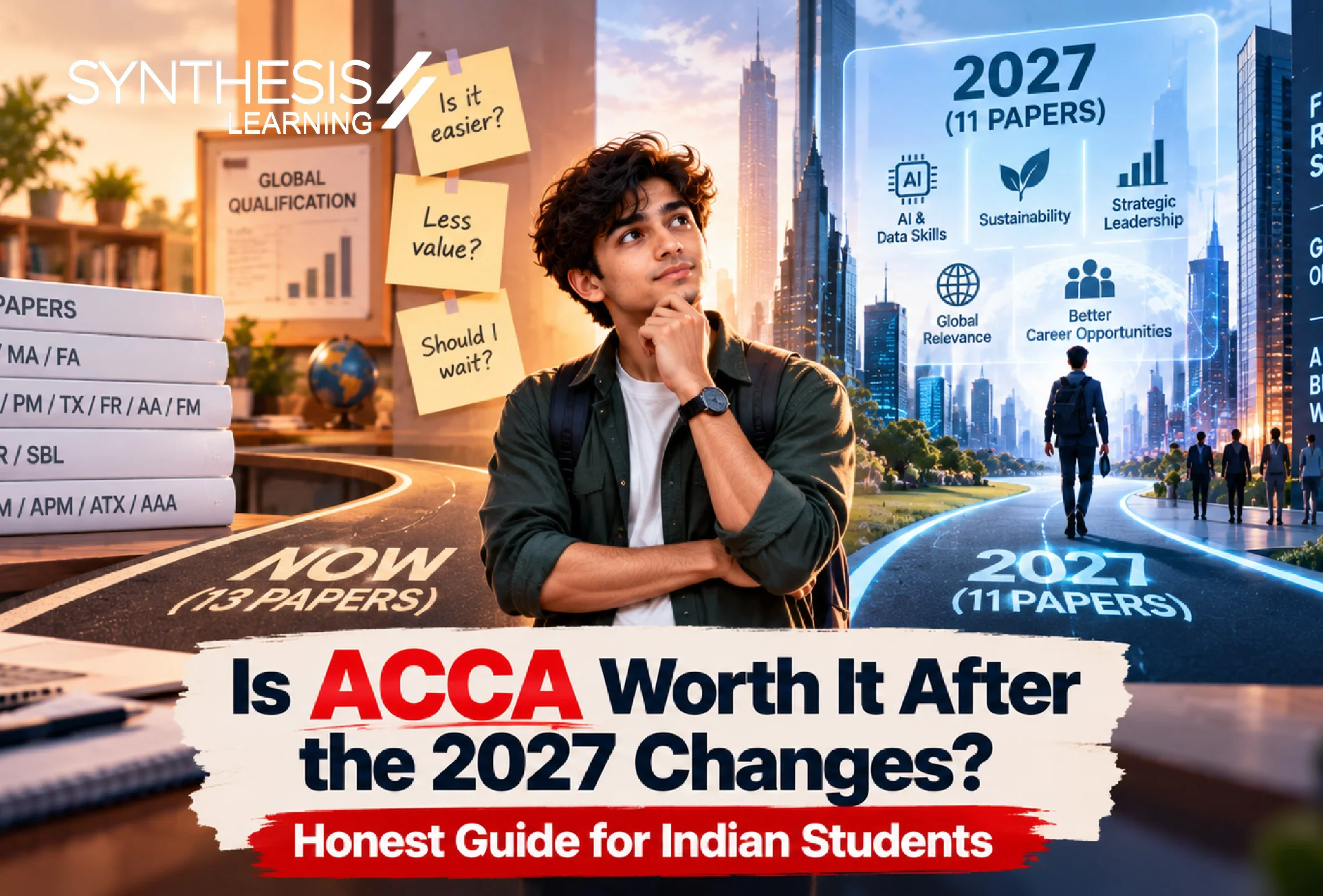
| Maximum 13 exams | 11 main qualification exams |
| Applied Knowledge | Knowledge |
| 6 Applied Skills exams | 5 Expertise exams |
| 2 core + 2 option exams at Strategic Professional | 2 core + 1 option exam |
| EPSM | Essential Employability Modules integrated by level |
| Technology already included | AI, data and digital capability become more explicit |
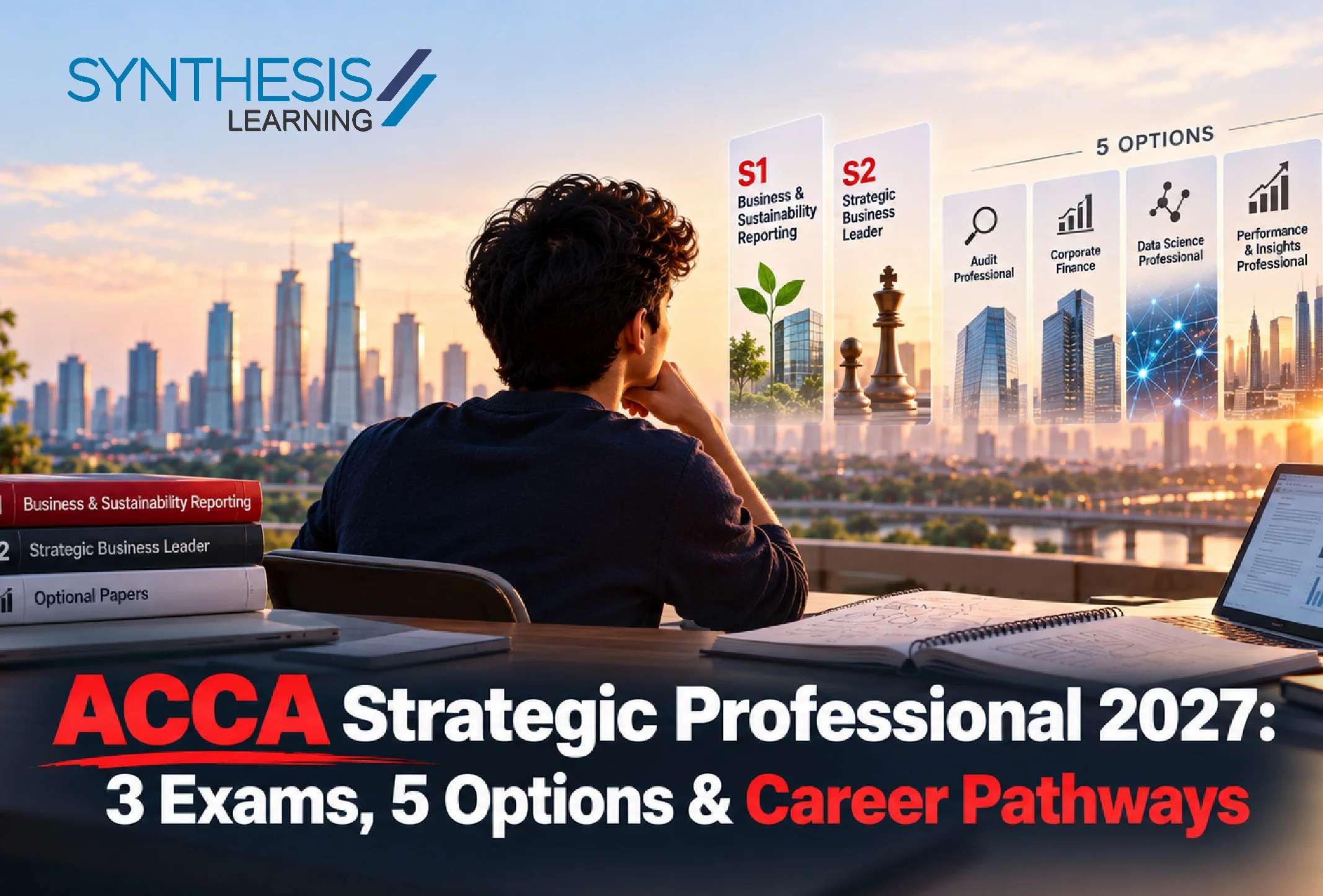
| 4 Strategic Professional options | 5 options, including Data Science Professional |
The current qualification requires up to 13 exams, while the redesigned route has five Expertise exams plus two compulsory and one optional Strategic Professional exam, alongside the Knowledge stage.
For the complete structural comparison, see ACCA New Syllabus 2027 vs Current Syllabus
What Does NOT Change About ACCA?
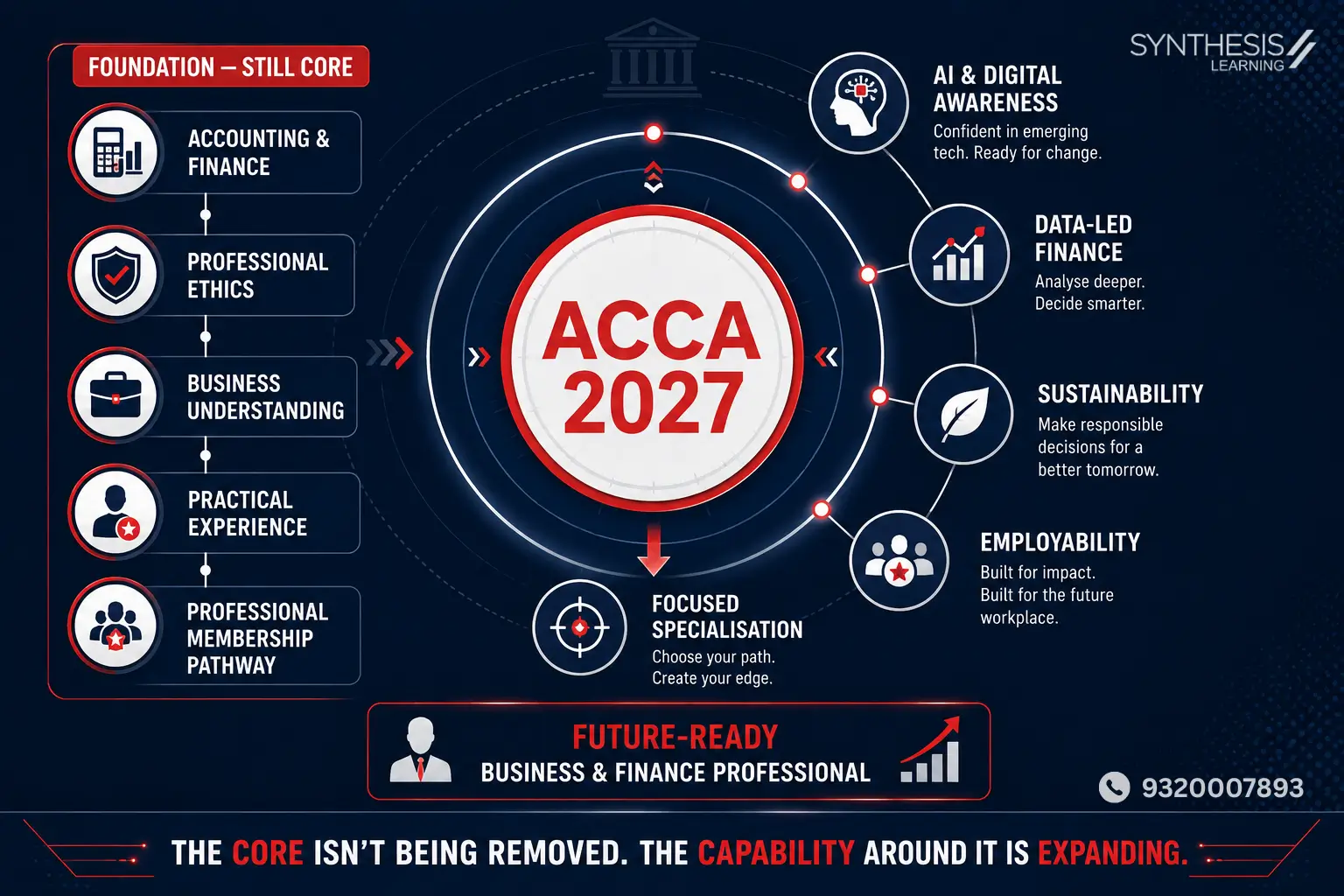
The redesign modernises the qualification. It does not remove its professional core.
Practical experience still matters
Students will still need a minimum of 36 months of supervised relevant practical experience and Performance Objectives to become ACCA members. ACCA has said the future Performance Objectives will be updated, but the minimum experience requirement remains.
Ethics and professional judgement remain central
ACCA explicitly says its rigour is not being reduced and that ethics remains at the heart of the qualification.
The membership pathway remains
Students still progress through exams, Employability Modules and PER towards ACCA membership and the Chartered Certified Accountant designation.
Global professional relevance remains
ACCA continues to position its members as globally recognised professional accountants, while specific regulated activities in individual countries can have additional local requirements.
The important idea is:
ACCA’s professional foundation remains. The capabilities being built around it are expanding.
Why ACCA Could Become More Relevant in 2027?
This is arguably the most important part of the redesign.
AI and Digital Capability
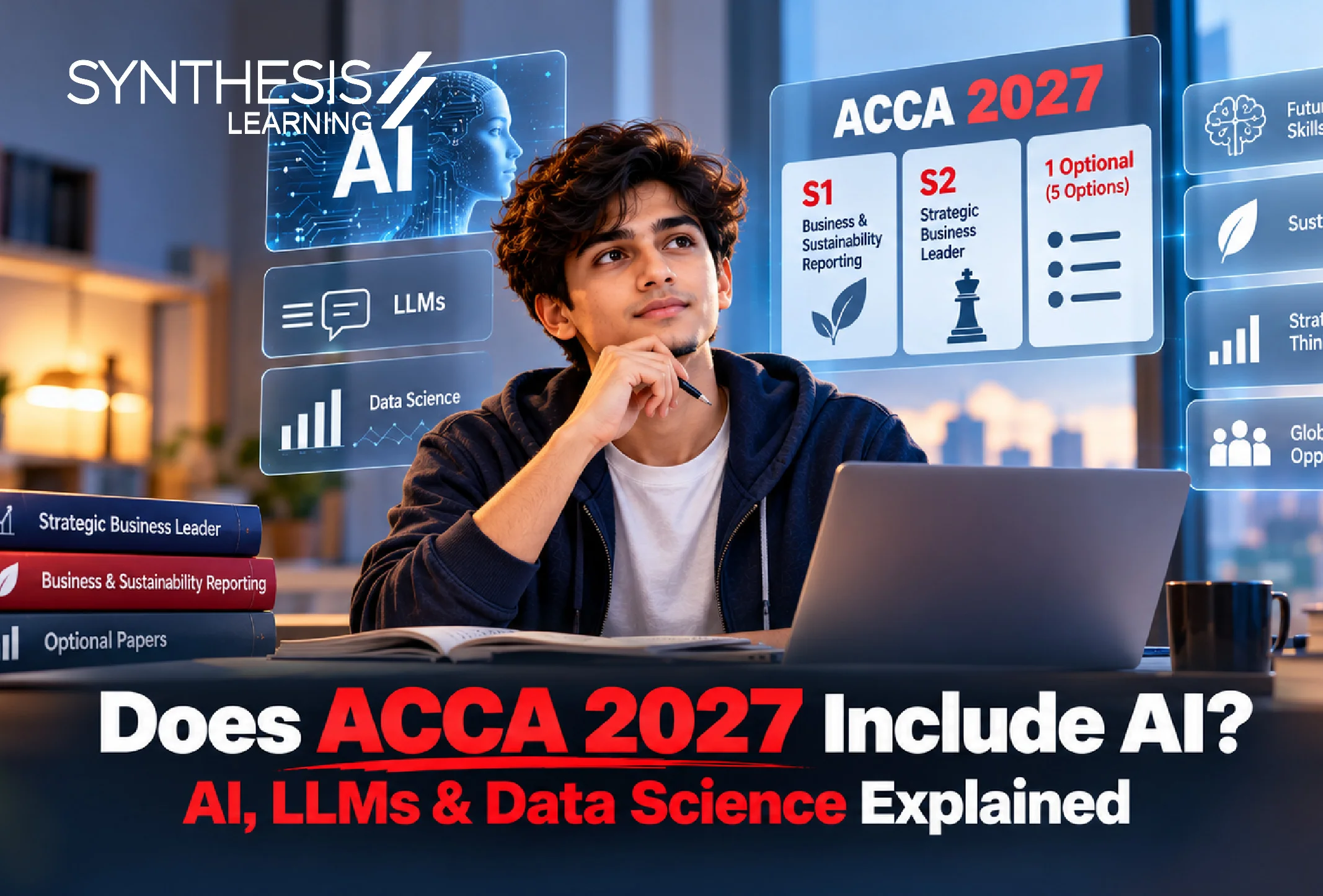
ACCA’s future Digital Tech and Innovation learning covers digital transformation, Python, SQL, data science techniques and even an introduction to AI and Large Language Models (LLMs).
The aim is not to turn accountants into software engineers.
It is to prepare finance professionals who understand finance + business + technology well enough to work intelligently in increasingly digital organisations.
Data-Led Finance
The Expertise stage includes Performance with Data Analysis, while Data Science Professional becomes an optional Strategic Professional specialisation.
Sustainability
Business and Sustainability Reporting becomes a compulsory Strategic Professional exam, giving sustainability a more visible place within advanced professional learning.
Employability
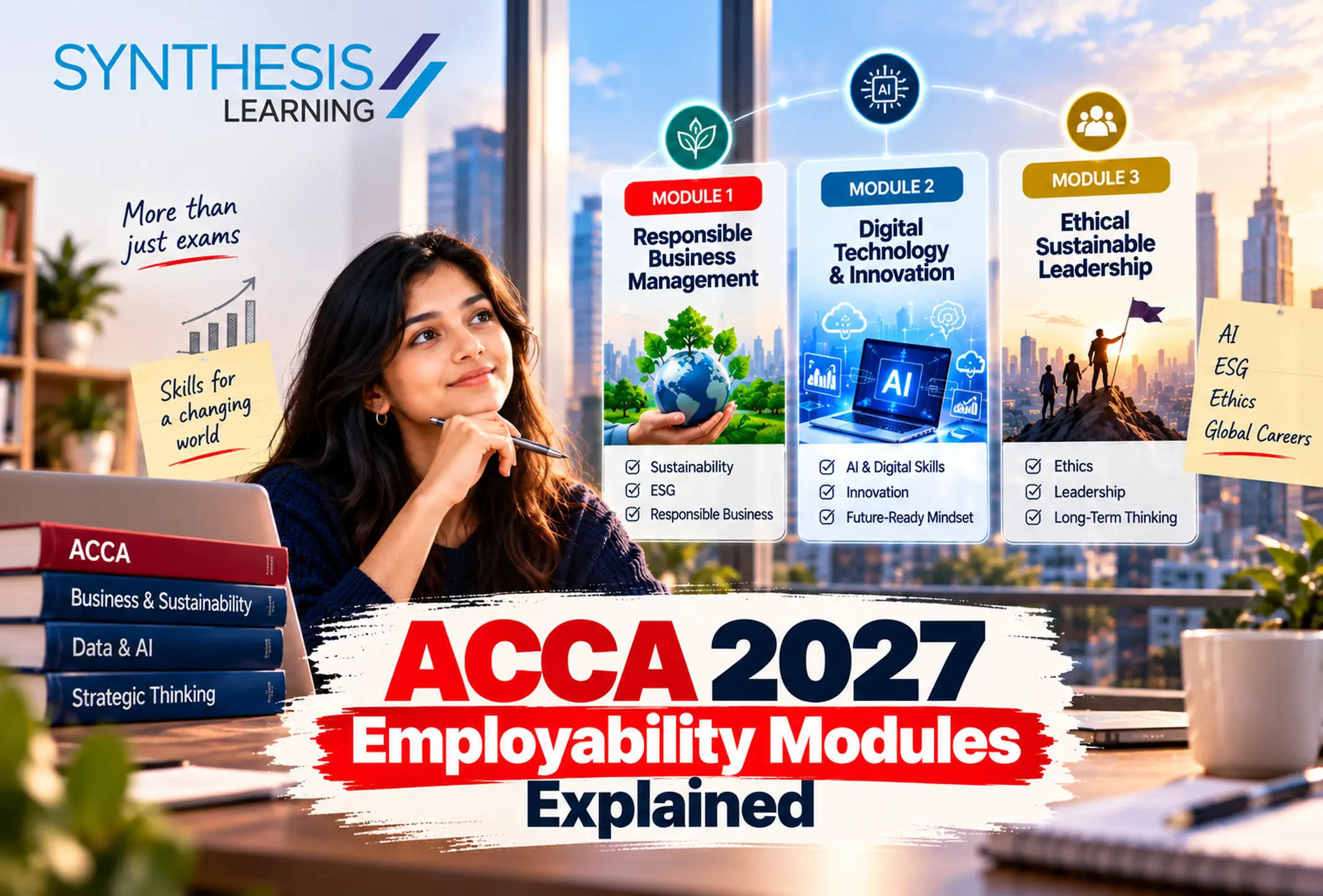
Every main level combines exams with an Essential Employability Module designed to develop technical and workplace-ready skills together.
The stronger argument for ACCA after 2027 is not “fewer exams.” It is a broader professional skill set.
Is ACCA Becoming Easier in 2027?
Not simply because the exam count falls.
Yes, the redesigned route requires fewer exams overall and only one Strategic Professional option instead of two.
But the qualification also integrates mandatory Employability Modules, modern assessments and deeper emphasis on technology, data, sustainability and professional application. ACCA explicitly states that the redesigned qualification will remain as rigorous as before.
Reality check:
The route becomes leaner. The expected professional capability becomes broader.
Where Does ACCA 2027 Create the Strongest Career Value?
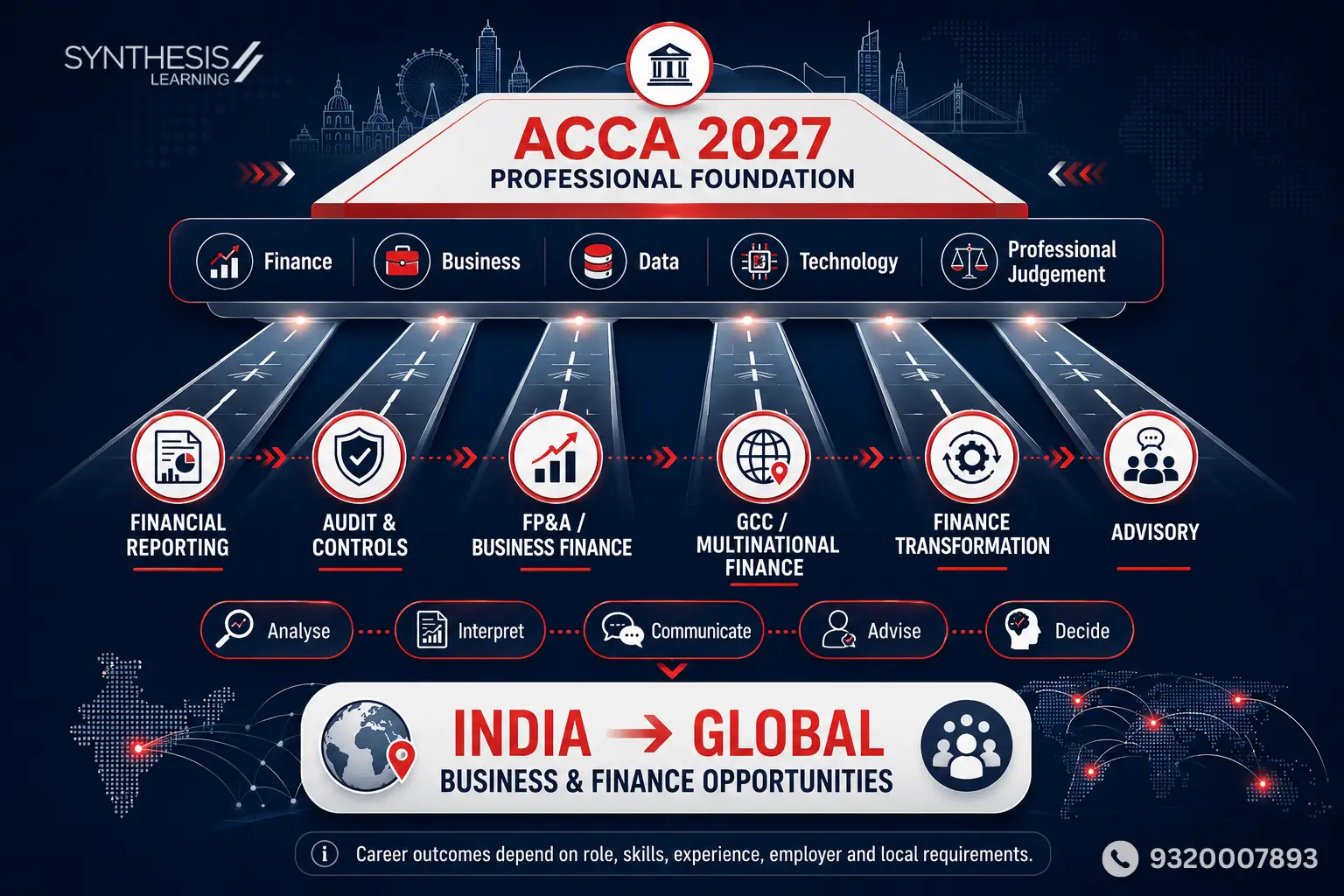
ACCA remains fundamentally an accounting and business-finance qualification, but the range of roles that use those capabilities is broad.
| Career direction | Where ACCA can add value |
| Financial reporting & accounting | Reporting, professional accounting and business understanding |
| Audit, risk & controls | Assurance, governance, risk and control capability |
| FP&A & business finance | Performance analysis, finance and strategic decision support |
| GCC & multinational finance | Global finance knowledge combined with business and digital capability |
| Finance transformation | Finance expertise + stronger technology and process awareness |
| Tax & advisory | Technical tax knowledge with professional business application |
| Data-led finance roles | Finance domain knowledge combined with analytics awareness |
India’s GCCs are particularly relevant here.
ACCA’s 2025 research on Indian Global Capability Centres describes them as moving from transaction-focused back-office operations towards high-value and innovation-led work. It highlights finance opportunities in areas including reporting, FP&A, business partnering, data analytics, compliance and transformation.
That makes the redesigned ACCA’s stronger business, digital and analytical layer particularly relevant to students considering multinational finance environments in India.
Is ACCA useful for FP&A?
It can be.
ACCA is not exclusively an FP&A qualification, but financial analysis, performance, finance, reporting, business understanding and data-led decision-making can all support an FP&A or business-finance profile. ACCA’s GCC research specifically identifies planning and analysis among evolving finance opportunities in India.
What Are the Advantages of ACCA 2027 for Indian Students?
The redesign can strengthen several aspects of the ACCA proposition.
| Potential advantage | Why it matters |
| Global professional orientation | Useful for multinational and international finance environments |
| AI & technology integration | Builds awareness of how digital tools are reshaping finance |
| Data-led learning | Supports increasingly analytical finance roles |
| GCC relevance | India’s GCC ecosystem includes growing finance, analytics and transformation work |
| Broad career applicability | Reporting, audit, FP&A, business finance, advisory and transformation |
| Employability development | Professional capability is built alongside technical learning |
| Flexible specialisation | Future options allow stronger alignment with career interests |
The addition of Data Science Professional is particularly interesting because ACCA is allowing students who want it to go deeper into data science and analytics within the accountancy profession.
This is why the redesigned qualification is better viewed as an increasingly AI-aware global business and finance qualification, rather than only a route into traditional accounting work.
What Should You Consider Before Choosing ACCA in India?
Being positive about ACCA does not mean choosing it blindly.
A few practical considerations can help you make a much stronger decision.
Be ready for professional-level commitment
ACCA offers flexibility, but it still requires consistent study, question practice and professional application.
Build experience alongside your exams
Because PER remains part of membership, students benefit from thinking about internships and relevant workplace exposure as part of the journey—not something to consider only after exams.
Match the qualification to your career
ACCA is particularly broad across accounting and business finance.
If you already know that you want a very different specialist direction, comparing qualifications first can save you time later.
Plan the investment sensibly
Your exemptions, tuition route, exam progression and preparation pace all affect the overall time and cost.
Keep developing outside the exam syllabus
The strongest profile combines professional knowledge with communication, workplace confidence, digital capability and practical business understanding.
Positive reality:
ACCA gives you the professional framework. The way you build around that framework can significantly influence its career value.
How to Think About the Value and ROI of ACCA
ROI should not be judged only by:
“What salary will I earn immediately after ACCA?”
A better view is:
| Value dimension | What to evaluate |
| Qualification investment | Registration, exams/modules and learning support |
| Time investment | Exemptions + realistic exam progression |
| Career access | Roles and employers you become better prepared to compete for |
| Skill development | Finance + business + technology capability |
| Practical experience | Relevant work built alongside the qualification |
| Long-term progression | How the qualification supports your career over several years |
ACCA has not yet published all final fee details for each component of the redesigned qualification, so future 2027 cost calculations should be updated once those fees are officially released.
Quick insight:
The value of ACCA is better judged across your career trajectory, not only your first salary.
For detailed figures, see ACCA Course Fees in India and ACCA Salary in India
Is ACCA 2027 the Right Fit for You?
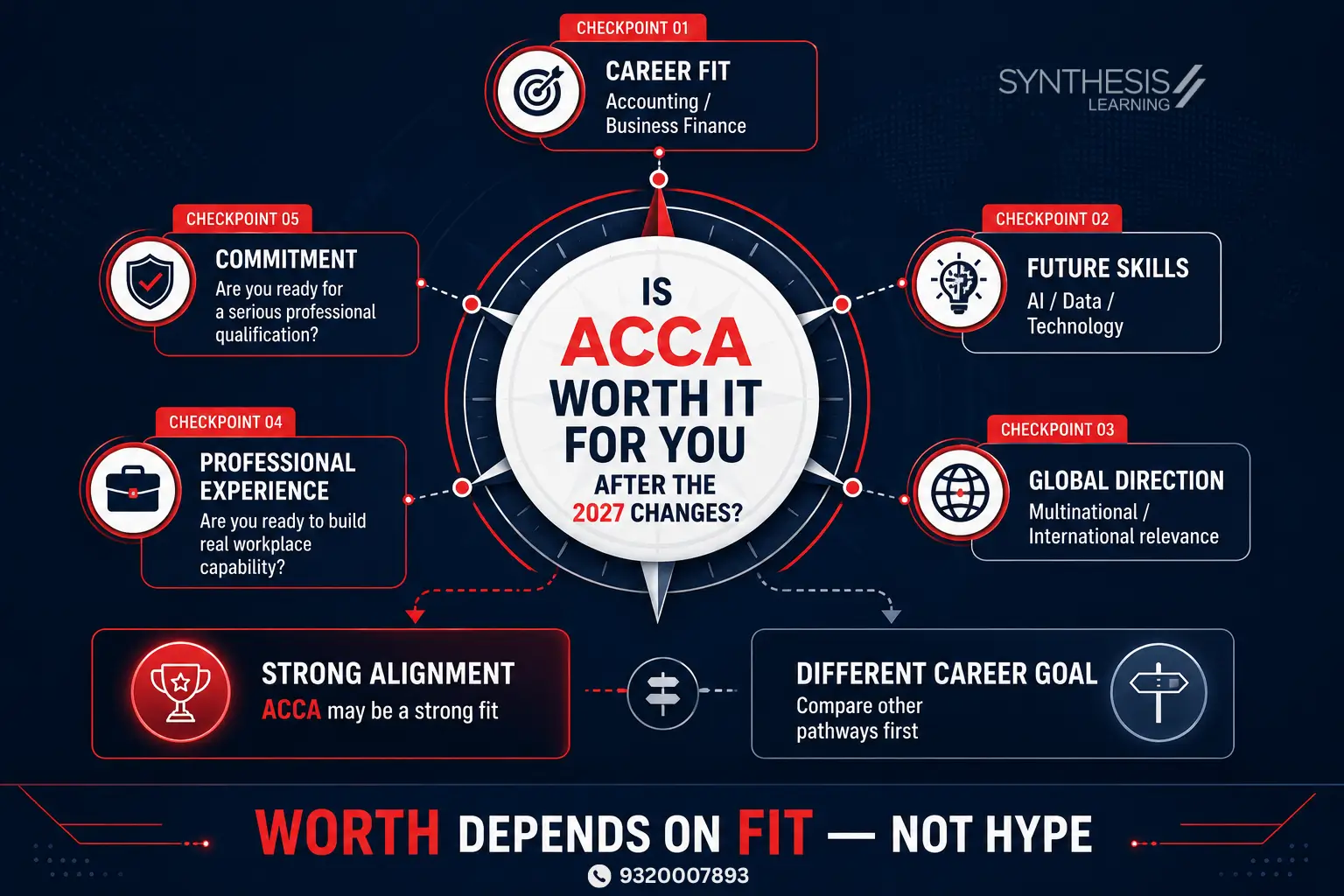
There is no universally “best” finance qualification.
There is only a better fit for a particular career direction.
| ACCA may be a strong fit if… | Another pathway may fit better if… |
| You want global accounting and business-finance careers | Indian statutory practice is your primary ambition |
| Reporting, audit, FP&A or business finance interests you | Investment research and portfolio management are your main interests |
| You want finance + data/technology exposure | You want a deeply technical software/data-science career |
| You value a globally oriented professional pathway | Your career goal sits outside accounting and finance |
| You want broad professional finance capability | You already know a narrower specialisation suits you better |
For context, ICAI highlights CA career avenues across practice, audit, taxation, financial reporting, insolvency, corporate finance and other areas, while CFA Institute positions the CFA Program around investment analysis, asset valuation and portfolio management.
IMA positions the US CMA around management accounting, financial planning, analysis and decision support.
So:
CA → particularly relevant to Indian accounting, tax, audit and practice pathways
CFA → investments, research, valuation and portfolio careers
US CMA → management accounting, planning, analysis and decision support
ACCA → broad global accounting, reporting, audit and business-finance careers
The question is not:
Which qualification wins?
It is:
Which qualification gets me closer to the work I want to do?
Making ACCA Worth the Investment: The Synthesis Learning Approach
Simply enrolling for ACCA does not create the full value of the qualification.
The strongest journey combines:
exam readiness + conceptual depth + practical capability + career preparation.
Synthesis Learning – a House of Global Courses with 25+ years of legacy in business and finance education – builds its ACCA ecosystem around that wider journey.
As an ACCA Platinum Approved Learning Partner, support includes:
- Concept-first ACCA preparation
- 1-on-1 mentorship and paper planning
- Structured doubt-solving
- Tests and exam-focused mocks
- Foundation support where exemptions create knowledge gaps
- Classroom, live-online and self-paced learning
- Campus-to-Corporate career readiness
- Exposure to an in-house ACCA Approved Employer ecosystem through Ascentium India
As finance itself becomes increasingly digital, SL also blends practical technology awareness, data-led thinking, professional communication and workplace readiness into the wider student journey.
The aim is not simply:
“Clear ACCA papers.”
It is:
“Build the professional profile that makes completing ACCA valuable.”
Final Verdict: Is ACCA Worth It After 2027?
YES – for the right career direction
If you want a broad professional pathway across accounting, reporting, audit, FP&A, business finance, GCCs or multinational finance, ACCA remains strongly relevant.
THE REDESIGN STRENGTHENS THE CASE
AI, digital technology, data, sustainability and employability are becoming more visible without removing ACCA’s accounting and professional foundation.
THE REAL VALUE COMES FROM HOW YOU USE IT
Combine the qualification with relevant experience, practical capability, communication skills and thoughtful career planning.
That is ultimately what makes ACCA worth the investment.
ACCA 2027 becomes more future-ready. Whether it becomes more valuable for you depends on what future you are preparing for.